
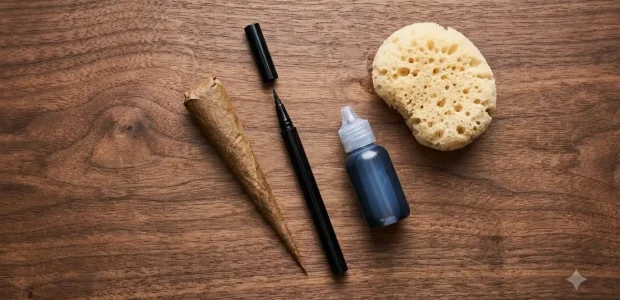

Nothing around the house safely replaces tattoo ink. So what can I use if I don’t have tattoo ink? As of October 7, 2026, the FDA has approved no pigment for injection into skin, so wait for a licensed artist or choose a non-needle option.
Home substitutes carry real infection risk, and tattooing rules differ by state and country. EasyTatt, a brand founded in 2017, sells plant-based semi-permanent tattoos that its FAQ says last 9 to 15 days, a needle-free way to try a design.
This guide is general information, not medical or legal advice. See a health care provider for any skin reaction or sign of infection, and check your local rules before tattooing anyone.
What can I use if I don’t have tattoo ink?
No household item is a safe substitute for tattoo ink, and the FDA has not approved any pigment for injection into the skin. The safe routes are a licensed artist or a needle-free tattoo. The FDA’s tattoo Q&A adds that no color additives are approved for tattoos.
- Wait and book a licensed tattoo artist, and ask what ink they use.
- Try a needle-free temporary or semi-permanent tattoo first.
- Skip the tattoo for now.
Do not use pen or marker ink, India ink, charcoal, soot or ash, food coloring, printer ink or nail polish. None of them is made or approved for use under the skin.

Our Pick
Why are household substitutes for tattoo ink unsafe?
Household substitutes are not made or approved for use under the skin, and the FDA warns that contaminated ink and unclean equipment can cause serious infections. Can you use pen ink to tattoo yourself? No. Is homemade tattoo ink safe? No. The FDA has approved no pigment for injection, and that applies to professional tattoo inks too. A licensed artist can at least tell you which ink they use, while a homemade mix adds a second problem, because nobody can say what is in it or whether it is clean.
Here is what the FDA’s tattoo safety guidance flags:
- Contaminated ink: infections can come from ink contaminated with bacteria or mold, and the FDA issued a separate safety alert in May 2019 about certain tattoo inks contaminated with microorganisms.
- Unclean equipment: serious infections can also come from unhygienic practices and equipment that is not sterile.
- DIY kits: the FDA says inks and kits sold for do-it-yourself tattooing have been associated with infections and allergic reactions.
- Delayed reactions: the FDA has received reports of bad reactions right after tattooing and even years later.
- Warning signs: a rash with redness or bumps near a tattoo, especially with a fever, is a reason to contact a health care professional.
What should you do if you already used a substitute?
Contact a health care provider and do not try to diagnose a reaction yourself. The FDA says problems with tattoos can be reported through MedWatch or by phone at 1-800-332-1088.
Can I legally tattoo at home?
Home tattooing rules depend on where you live. In England and Wales, tattooists and premises must be registered with the local council, and across Great Britain tattooing anyone under 18 is an offense. US rules vary by state. Rutland County Council’s licensing page says both the tattooist and the premises must be registered under the Local Government (Miscellaneous Provisions) Act 1982. Gloucester City Council says tattooing anyone under 18 is an offense even with parental consent, under the Tattooing of Minors Act 1969.
| Where | What the rules say | Who to check with |
|---|---|---|
| United States | Laws vary by state, and tattooing another person usually requires training and registration. The Grant County, Indiana health department says tattooing at home or in an unlicensed location is illegal and lists a $500 fine for unlicensed practice. | Your state or county health department |
| United Kingdom | In England and Wales, the tattooist and premises must both be registered with the council. Across Great Britain, tattooing anyone under 18 is an offense, even with parental consent. | Your local council licensing team |
| Canada, Ireland, Netherlands | This guide did not confirm home tattooing rules for these countries. | Your local public health authority or council |
Tattooing someone else
Tattooing another person generally requires a license or registration. FindLaw’s state overview says US requirements vary and usually include training and registration, and councils in England and Wales require both the tattooist and the premises to be registered.
Tattooing yourself
The rules on tattooing yourself are less clear. This guide found no official source confirming that it is legal in the US or the UK, so check with your local health department or council. Legal is also not the same as safe: the contamination and infection risks above apply to you as much as to a client.
What are the safe alternatives to tattoo ink?
The safer options are a licensed artist or a non-needle tattoo that fades. The FDA says temporary tattoos may last up to 3 to 4 weeks, while sticker tattoos last hours to days. See the FDA’s overview of tattoo types for details.
| Option | Needle? | How long it lasts | Main risk noted |
|---|---|---|---|
| Licensed artist (permanent) | Yes | A lifetime, per the FDA | The FDA has approved no pigments for injection, and infection and reaction risks remain. |
| Sticker or decal temporary tattoo | No | Hours to days, per the FDA | The FDA has received reports of allergic reactions to some temporary tattoos. |
| Henna | No | Not specified in the FDA fact sheet | The FDA approves henna only as a hair dye, not for skin. |
| Black henna | No | Not specified by the FDA | The FDA has received reports of skin injuries, and the product may contain hair dye or other dye. |
| Plant-based semi-permanent tattoo | No | Typically 9 to 15 days, per EasyTatt’s FAQ | The brand advises a patch test, as with any skincare product. |
Sticker and decal temporary tattoos
Sticker tattoos last hours to days, according to the FDA, which has also received reports of allergic reactions to some temporary tattoos. If a design causes a rash or swelling, contact a health care provider.
Henna and black henna: what to avoid
Skip black henna. The FDA says henna is approved only as a hair dye and not for direct application to the skin, and it has received reports of injuries from products sold as henna or as black henna. The FDA adds that black henna is often darkened with a coal-tar hair dye containing p-phenylenediamine (PPD), which can cause dangerous skin reactions in some people.
Semi-permanent plant-based tattoos
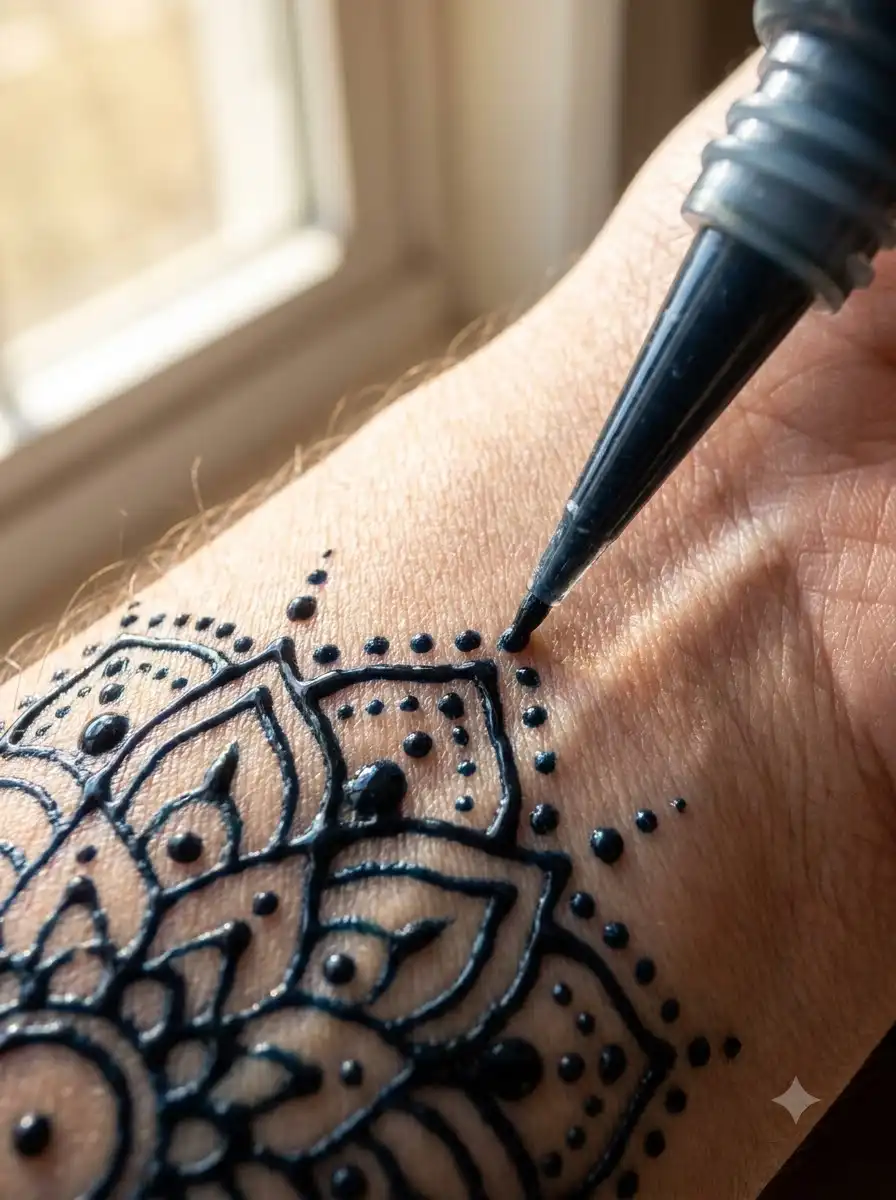
EasyTatt makes semi-permanent tattoos from the juice of the Genipa americana fruit. Per its FAQ, the stain develops over 24 to 48 hours and typically lasts 9 to 15 days. EasyTatt says its tattoos are considered safe for most people on healthy, intact skin when used as directed, and each order includes a patch test. That is the brand’s claim, not independent testing. Its InkSurance guarantee gives store credit plus 10% if a tattoo does not develop as directed. As of October 7, 2026, EasyTatt’s current offers include free USA shipping over $85, a free mystery pack on $75+ orders, and a Top Sellers Pack of six tattoos for $32 (regular price $46).
Which option fits your situation?
The short answer to “what can I use if I don’t have tattoo ink” is a licensed artist for a permanent tattoo and a needle-free option to test a design first. Tattooing anyone under 18 is an offense in Great Britain, so needle-free options are the route to consider there, after checking the product’s age guidance.
Related reading:
- EasyTatt promo offers
- DIY image-to-tattoo transfer methods
- ready-made EasyTatt temporary designs
- day-by-day tattoo healing steps
- If you want a permanent tattoo, book a licensed artist and ask what ink they use.
- If you want to test a design or placement first, try a needle-free semi-permanent tattoo.
- If you are under 18 in Great Britain, a licensed artist cannot tattoo you, so stick to needle-free options and check the product’s age guidance first.
- If you have sensitive skin, do a patch test first. EasyTatt’s FAQ says a small patch test comes with every order.
- If henna is on your list, avoid black henna.

FAQ
Can you use nail polish as tattoo ink?
No. Nail polish is not made for injection into skin, and the FDA has approved no pigments for that use. Needlework with unapproved materials also raises infection risk.
What happens if you tattoo without ink?
Any needle puncture breaks the skin, and the FDA warns that unclean equipment and contaminated ink can cause serious infections. Leaving the ink out does not make home needlework safer.
Do semi-permanent tattoos use ink?
EasyTatt says its tattoos use juice from the Genipa americana fruit. The compound genipin reacts with the top skin layer over 24 to 48 hours and forms a blue-black stain.
How long do semi-permanent and temporary tattoos last?
EasyTatt’s FAQ says its plant-based tattoos typically last 9 to 15 days, though another answer on the same page says they fade within 7 to 14 days. The FDA says temporary tattoos may last up to 3 to 4 weeks and sticker tattoos hours to days.
Is black henna a safe alternative to tattoo ink?
No. The FDA has approved henna only as a hair dye, not for skin, and has received reports of skin injuries from henna and black henna products, which may contain hair dye or other dyes.
Can I get tattooed or tattoo myself if I’m under 18?
In Great Britain it is an offense to tattoo anyone under 18, even with parental consent. US rules differ by state, so check your state health department before doing anything.

Long has spent 7+ years running Google and Meta ad campaigns for e-commerce brands, which means he's watched thousands of shoppers abandon carts over a coupon field that wouldn't accept anything. He built SmartCartCodes to fix that. Every code listed here is checked against the merchant's live checkout before it's published, and anything that stops working gets pulled — not buried. He works directly with brands and affiliate networks across the US, UK, and EU.