
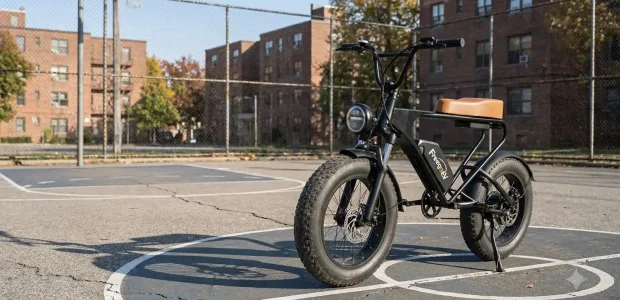

If you are wondering are freego e bikes street legal, the answer depends on the model. Freego, a California e-bike maker, labels its Class 2 models street legal but bars its Nova dirt bikes from public roads, so only some models comply as of October 11, 2026.
The X1 SE and M3 cap the throttle at 20 mph with pedal assist to 28 mph, while the X2 Pro hits 50 mph in off-road mode. Check your state’s class rules and the bike’s label first to see are freego e bikes street legal in your exact area.
This guide summarizes manufacturer statements and public sources and is not legal advice. E-bike rules vary by state, city and path, so confirm current requirements with your local authority before riding on public roads to ensure are freego e bikes street legal where you live.
Are freego e bikes street legal on public roads?
It depends on the model and mode: Freego’s Class 2 e-bikes cap the throttle at 20 mph, while its Nova dirt bikes exceed 28 mph and, per Freego’s own disclaimer, are barred from public roads. When people ask are freego e bikes street legal, the quick answer is to check the exact class of the bike.
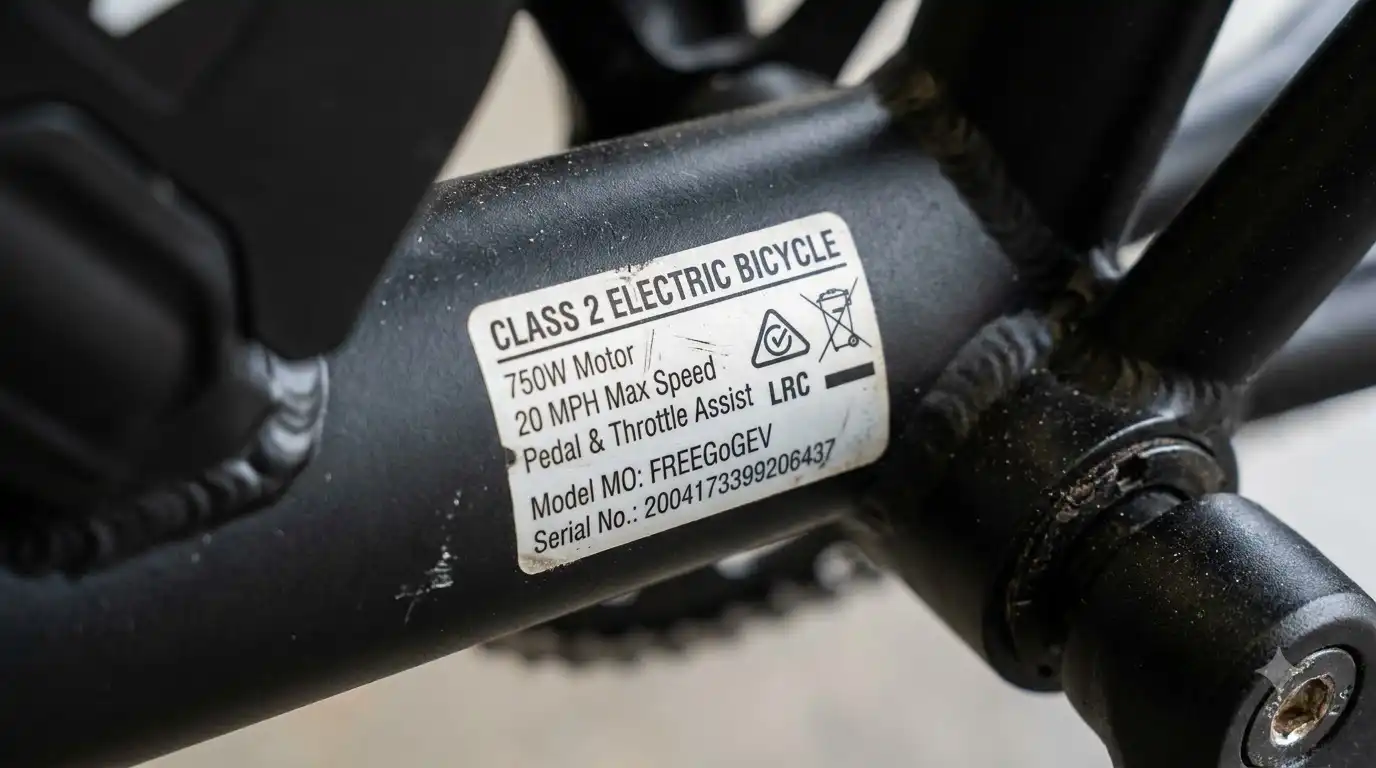
Freego’s usage and liability disclaimer says its e-bikes ship configured to Class 2 limits of 20 mph and 750 W, that Class 3 rules vary by state, and that riders must follow local, state and federal law without changing factory settings. It also ties X-Man City Mode to Class 3 speeds, so Freego’s own pages use two labels when discussing are freego e bikes street legal.
- Federal test: pedals, motor power and top speed.
- State class: Class 1, 2 or 3 under your state’s law.
- Local rules: city, park and path limits on top of state law.
What makes an e-bike street legal in most US states?
Working pedals, a motor of 750 W or less and a top assisted speed inside a class limit. Federal law (15 U.S.C. 2085) defines a low-speed electric bicycle as having fully operable pedals, a motor under 750 W and a top speed under 20 mph on motor power alone, and the full statutory definition is public. Madison, Wisconsin’s e-bike guide lists Class 1 and 2 at 20 mph and Class 3 at 28 mph, treats a bike beyond those limits as an e-moto, and says e-motos need registration, a license and insurance on public roads. Federal wording says under 750 W, while Madison’s table shows 750 W as the cap, so check how your state phrases the limit. Class counts vary by source: Freshly Charged cited 36 states plus D.C. in July 2026, while Aceable reports 41. A bike with a 20 mph throttle and 28 mph assist can fall outside a class in states where Class 3 bikes may not have a throttle. To figure out are freego e bikes street legal for you, compare these local caps against Freego’s specs.
Free Shipping
Which Freego models are street legal and which are off-road only?
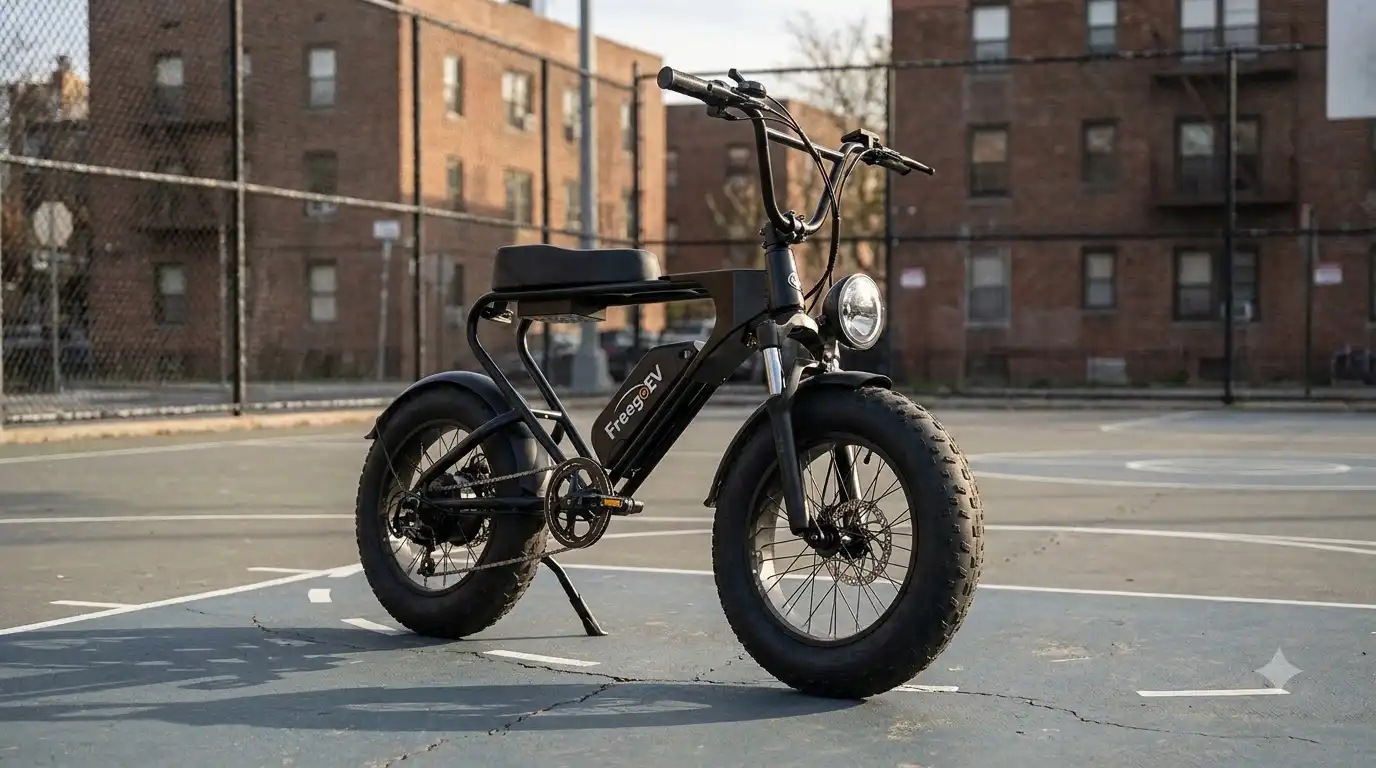
Freego lists the X1 SE and M3 as Class 2 e-bikes with 750W-class motors and 20 mph throttles, while its Nova, X0 and Natkie N1 are sold as off-road e-motos. So, which are freego e bikes street legal? Refer to the table below.
| Model | Price on Oct 11, 2026 | Motor | Throttle / assist speed | Freego’s road-use wording | Flag |
|---|---|---|---|---|---|
| X1 SE | $1,599 | 750 W nominal | 20 / 28 mph | Labeled Class 2 street legal; supports Class 2 and 3 riding where local rules allow | A 20 mph throttle plus 28 mph assist can fall between classes where Class 3 throttles are barred |
| M3 | $999 | 600 W nominal, 750 W peak | 20 / 28 mph | Class 2 compliance label shown | No turn signals |
| F2 Pro | $1,299 | 750 W nominal | 20 / 20 mph | Listed in Freego’s Class 2 collection | None |
| F0 | $1,299 | 500 W nominal | 20 / 20 mph | Listed in Freego’s Class 2 collection | Freego’s M3 comparison table lists an adjustable 28 mph setting, so confirm which applies |
| City Flow A1 | $1,999 | 500 W nominal, 750 W peak | 20 / 28 mph | Product page calls it city legal and compliant with Class II and III road standards | Freego’s homepage lists 750 W nominal, the product page lists 500 W |
| X1 and X2 Pro | $1,699 and $2,199 | 1,500 W and 3,000 W nominal | City 28 mph; Off-Road 37 and 50 mph | City Mode aligned with Class 3 standards; Off-Road Mode does not comply with public road rules | The X2 Pro notice says it may not qualify as Class 1, 2 or 3 in all jurisdictions |
| Nova, X0, Natkie N1 | $999 to $3,999 | 2,500 to 8,000 W peak | 37 to 53 mph top speed | Sold in Freego’s off-road e-moto category; the disclaimer bars the Nova series from public roads | This guide found no road-use wording for the X0 or Natkie N1 |
Freego’s product and policy pages, checked October 11, 2026, supply every figure above, and street legal is Freego’s label rather than a legal ruling. Where you ride still decides whether are freego e bikes street legal, and this guide did not check the X3 family.
How do Freego’s City Mode and Off-Road Mode affect legality?
On Freego’s X-Man dual-mode bikes, City Mode limits speed to 28 mph and software-restricts power to 750W, while Off-Road Mode unlocks full performance that does not comply with public road rules, per Freego’s disclaimer. This heavily impacts whether are freego e bikes street legal during a ride.
The rider picks the mode, so legality rests partly on which setting is active where you ride. Freego’s X2 Pro page lists 28 mph in City Mode and 50 mph in Off-Road Mode, with 3000 W nominal and 6000 W peak power, plus a notice that the bike may not qualify as a Class 1, 2 or 3 e-bike in every jurisdiction.
- City Mode: speed capped at 28 mph and power at 750 W, which Freego aligns with Class 3 standards where local rules allow it.
- Off-Road Mode: full performance for private land and designated trails, not public roads.
- Your part: choose the mode that fits where you ride and check your state’s Class 3 age, helmet and throttle rules.
Freego’s X2 Pro FAQ also describes a rider-performed way to lift the speed limit. A bike with the limit lifted goes beyond class limits and outside the federal low-speed e-bike definition, and Freego’s disclaimer warns that changed settings may void warranties and cause regulatory violations. Freego says the pedal-assist sensor qualifies the X2 Pro as an electric bicycle, which is a brand claim rather than a legal ruling.
What rules apply where you ride a Freego?
Even a Class 2 Freego must follow state, city and path rules to ensure are freego e bikes street legal: Fargo police warned in June 2026 that legality depends on design, top speed and location, and being sold online does not make a device legal to ride.
- Look for a class label. Madison’s guide says manufacturers should affix a Class 1, 2 or 3 label and that a bike without one is likely not a legal e-bike. On the pages this guide checked, only the M3 shows a Class 2 compliance label, so ask Freego whether other models carry one.
- Check your state’s class law, including Class 3 age, helmet and throttle rules. Madison’s table lists no minimum age for Classes 1 and 2 and 16 or older for Class 3.
- Check city ordinances, since cities such as Fargo publish their own limits on top of state law.
- Check path rules. Upway’s 2026 state guide says many trails and bike paths restrict throttle-equipped Class 2 bikes, and Electric Bike Report notes that e-bikes are barred from interstates.
- Keep Off-Road Mode for private land with permission or designated trails, as Freego’s disclaimer directs.
Can you ride a Freego e-bike in Canada, the UK, Ireland or the Netherlands?
Freego’s official stores serve only the U.S., Canada and Mexico, and the UK, Ireland and Netherlands cap legal e-bikes at 250W with 25 km/h or 15.5 mph assist, below Freego’s 750W Class 2 models. This means the rules determining are freego e bikes street legal differ greatly abroad.
| Market | Power limit | Assist cut-off | Notes | Source |
|---|---|---|---|---|
| UK | 250 W continuous | 15.5 mph | Rider 14 or older, usable pedals; otherwise moped or motorcycle rules; not allowed on pavements | GOV.UK |
| Ireland | 250 W continuous | 25 km/h | Treated as a bicycle; stronger types count as e-mopeds | RSA |
| Netherlands | 250 W | 25 km/h | No license plate or minimum age; a throttle that drives the bike above 6 km/h without pedaling ends e-bike status | Rijksoverheid |
| Canada (Québec) | 500 W | 32 km/h | Helmet required; rider 18 or older; not allowed on highways; other provinces set their own rules | SAAQ |
Freego’s 750 W models sit above the 250 W limits in the UK, Ireland and the Netherlands, and this guide did not check Freego Canada’s specs against provincial rules. UK riders can confirm current limits in the government’s e-bike rules.
What to know before buying a Class 2 Freego
Freego lists the X1 SE at $1,599 and the M3 at $999 on its official store, with free shipping to the contiguous U.S. and a 14-day return window for unopened bikes only. Checking if are freego e bikes street legal in your state before unboxing is crucial to avoid return fees.
| Model | Sale price | Was |
|---|---|---|
| X1 SE | $1,599 | $1,899 |
| M3 | $999 | $1,199 |
| F2 Pro | $1,299 | $1,799 |
| F0 | $1,299 | $1,599 |
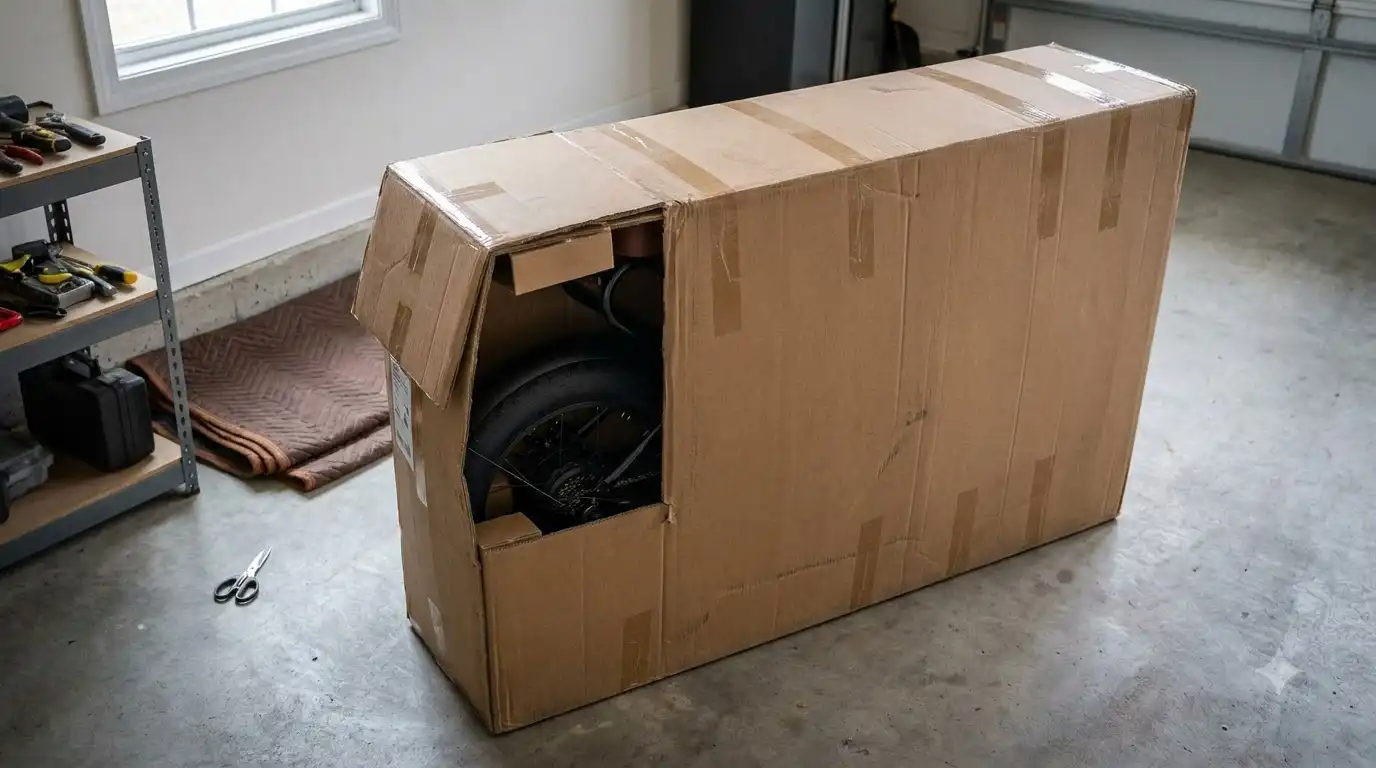
Prices come from Freego’s official store on October 11, 2026, and can change. Shipping is free to the contiguous U.S., with Alaska, Hawaii and Puerto Rico excluded per Freego’s product FAQ, and Freego quotes 3 to 8 business days for delivery. The return policy covers 14 days from delivery for unopened, unassembled and unused bikes only, deducts a flat $400 per bike and treats accessories as non-returnable, so confirm the class label and your local rules before ordering. The warranty covers the frame for 24 months and the motor, battery and controller for 1 year. Klarna, PayPal and Afterpay appear as payment options.
Freego’s official store lists these sale prices directly, and its 30-day price guarantee refunds the difference if the price drops within 30 days of purchase. Past buyers of an e-bike or e-scooter can email for a 15% returning-customer discount, which covers bikes but not parts or accessories. The M3 launch banner also mentions a first-50-orders price, which this guide could not confirm at checkout, so the table uses the listed $999.
Related reading:
Frequently asked questions
Do Freego e-bikes need a license, registration or insurance?
Not for class-compliant e-bikes in states that treat them as bicycles. Madison’s guide says e-bikes need none of the three, while e-motos need registration, a license and insurance on public roads. Freego leaves licensing research to riders looking into are freego e bikes street legal.
Can teens ride a Freego M3 on the street?
Freego markets the M3 as youth-friendly for riders 4’7″ to 5’11” tall. Age rules vary by state and affect whether are freego e bikes street legal for minors: Madison’s guide lists no minimum age for Class 1 and 2 and 16 or older for Class 3.
What happens if you ride an out-of-class e-bike on the road?
Rules vary by place, and some police departments now enforce them. Fargo police warned in June 2026 that legality depends on a device’s design and top speed. Freego’s disclaimer makes riders responsible for local compliance.
Does modifying a Freego void the warranty?
It can. Freego’s disclaimer says unauthorized changes to settings, components or software may void warranties and cause regulatory violations, and its warranty policy excludes self-modification and damage from improper use.
Do Freego’s UL and SGS safety marks make a bike street legal?
No. Freego says its Class 2 e-bikes were tested to UL 2849 by SGS and the X2 Pro battery is UL 2271 certified, but those are electrical safety marks. Confirm separately that a bike meets your state’s class rules.

Long has spent 7+ years running Google and Meta ad campaigns for e-commerce brands, which means he's watched thousands of shoppers abandon carts over a coupon field that wouldn't accept anything. He built SmartCartCodes to fix that. Every code listed here is checked against the merchant's live checkout before it's published, and anything that stops working gets pulled — not buried. He works directly with brands and affiliate networks across the US, UK, and EU.