
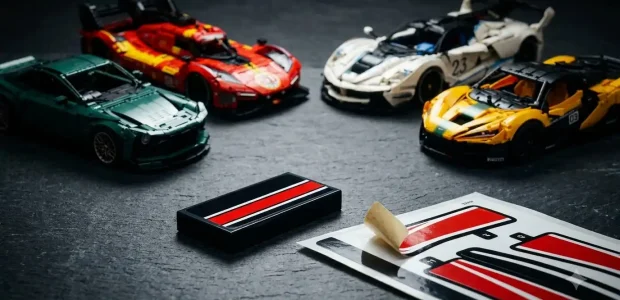

When weighing BAV Brick stickers vs printed pieces, you’ll quickly find that their detailed vehicle sets rely on decals, not pad-printed pieces, for nearly all their color and livery work. BAV Brick makes large, highly detailed supercar and RC building sets as a budget-friendly LEGO Technic alternative.
What “Stickers vs. Printed” Actually Means on a Brick Set
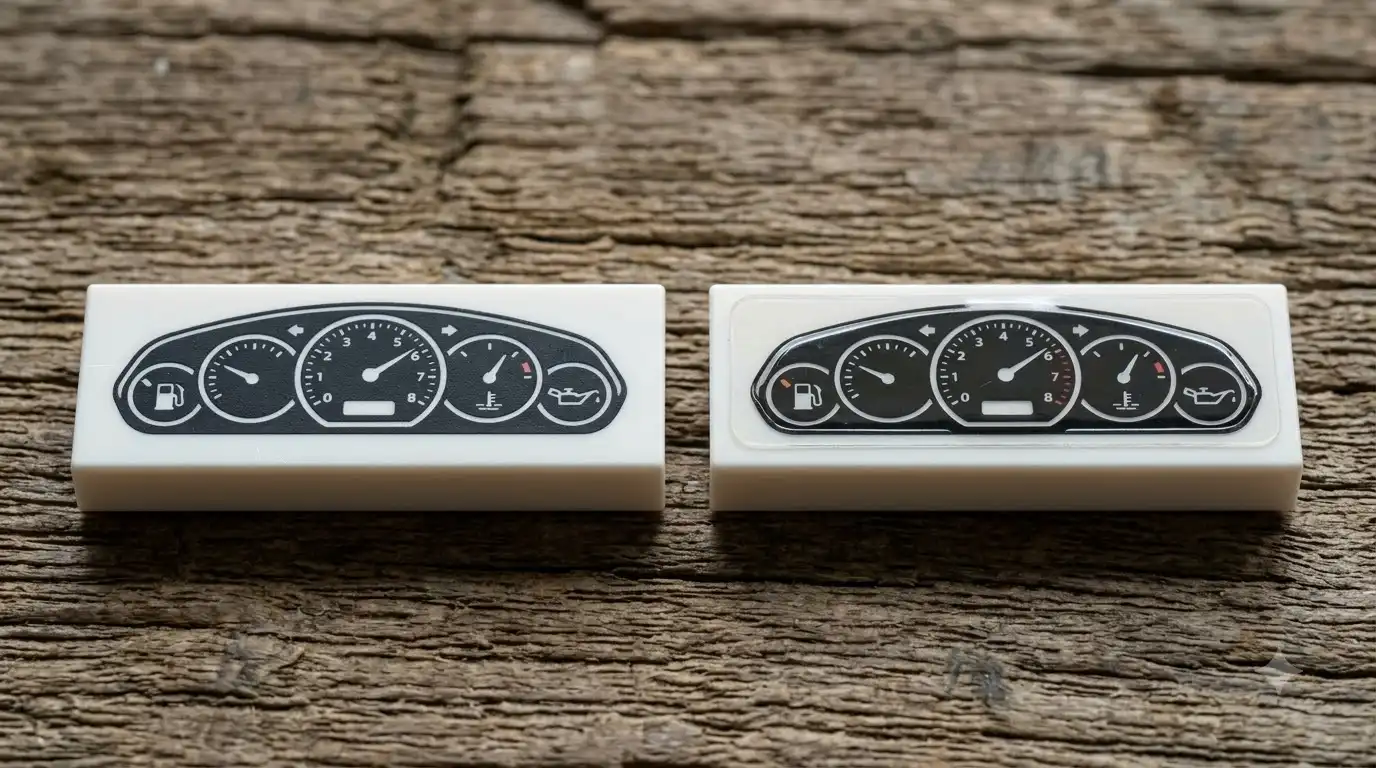
Stickers, also called decals, are separate adhesive pieces you apply by hand after a part comes out of the mold. Printed pieces have the design baked directly onto the plastic during manufacturing, so they arrive ready to use with no application step. Across the LEGO-compatible brick hobby, the debate over BAV Brick stickers vs printed bricks usually comes down to cost, because printing is far more expensive to set up per color or design change, while a sticker sheet can carry dozens of different graphics at once without touching the molding line.
Does BAV Brick Use Stickers or Printed Pieces?
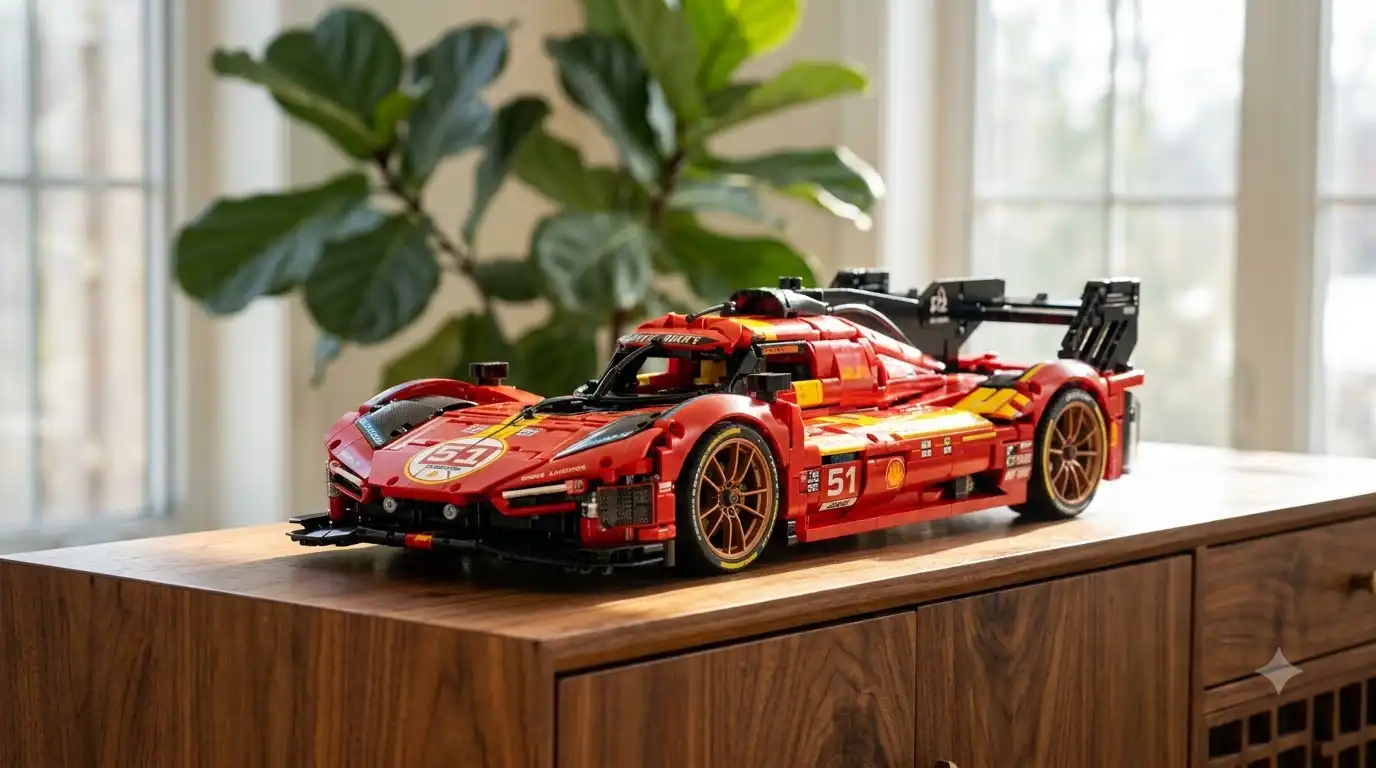
When comparing BAV Brick stickers vs printed elements, reviews confirm the brand’s models are built almost entirely around decals for logos, gauges, and livery, and printed elements aren’t something we found described in current product listings. Buyer feedback on BAV Brick’s official product pages backs this up: one reviewer building the 1:8 Land Rover Defender praised the metal-finish stickers but noted they take real patience to apply, and a review on one of the brand’s Ferrari-style models points out how much decal work a highly detailed set requires. Limited-edition color runs go further still, adding custom transfer stickers on top of the standard sheet to create one-off liveries.
BAV Brick Stickers vs Printed: Side-by-Side
| What matters | Stickers (decals) | Printed pieces (tampo) |
|---|---|---|
| How it’s applied | Peeled and pressed on by the builder after the part is molded | Baked in at the factory; ready to use out of the bag |
| Alignment risk | Real risk of a crooked or off-center placement, especially on small panels | None; alignment is fixed before it ships |
| Cost per color/design | Cheap to add many colors and fine detail across one model | Expensive per design change, so brands use it sparingly |
| Durability over years | Can peel, crease, or fade with handling, heat, or display time | Holds up as long as the plastic itself |
| Flexibility | Can be skipped, repositioned once while wet, or left off entirely | Permanent; you’re stuck with the factory design |
| On BAV Brick sets | The default for logos, gauges, and custom liveries | Not something current reviews or listings describe |
The trade-off in the BAV Brick stickers vs printed debate is straightforward: decals let BAV Brick pack far more visual detail and color variation into a model than pad printing would allow at the same price, at the cost of an application step that rewards patience.
How to Apply BAV Brick Decals Without Wrecking Them
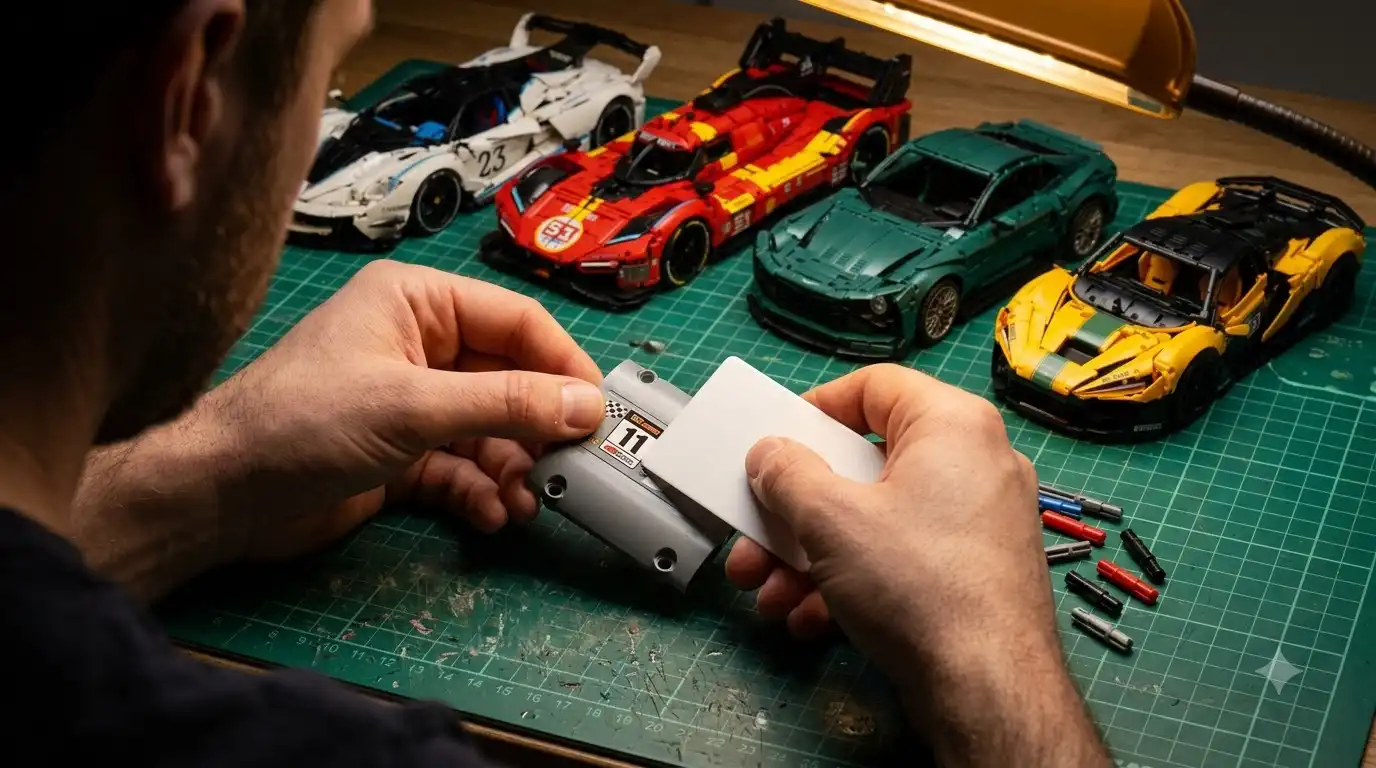
- Dry-fit every decal in its exact position before peeling the backing. Misjudged placement, not the adhesive itself, is the complaint builders raise most often.
- Work from the center of the decal outward with a card edge or fingertip to push out air bubbles, rather than pressing the edges down first.
- Handle symmetrical body panels, left and right sides, together so both line up the same way. Side-to-side mismatch is a known trouble spot on detailed car kits like these.
- Let each decal set for a few minutes before handling that section again, especially on curved or textured surfaces where it’s more likely to lift.
Does This Affect Which BAV Brick Set You Should Buy?
If a permanent, factory-perfect finish matters more to you than raw detail, decal-heavy kits will feel like more work than a printed-piece set from a brand that uses pad printing. If you’d rather have a highly detailed, characterful model at a lower price and don’t mind twenty minutes of careful sticker work, the choice of BAV Brick stickers vs printed models depends on your building style, but BAV Brick’s approach is exactly what delivers that detail. Special-edition color runs with transfer stickers ask for the most patience of all, so first-time builders may want to start with a standard-livery set before taking one on.
FAQ
Do all sets use the BAV Brick stickers vs printed approach?
That matches what reviews and product listings currently show for the brand’s detailed vehicle sets, but decal counts vary by model, so check the specific product page if this is a deciding factor for you.
Can I reposition a BAV Brick decal if I place it wrong?
Only in the first few seconds, and only if it’s still wet from the backing. Once it sets, peeling it back usually creases or dulls the finish, which is why a dry-fit test matters.
Will BAV Brick’s decals hold up over time?
Decals generally hold fine under normal indoor display, but direct sunlight, high heat, and frequent handling will wear on adhesive and print quality faster than a pad-printed piece would.
Is decal-heavy detailing a dealbreaker compared to official LEGO Technic sets?
Not inherently. It’s a manufacturing trade-off most alternative brick brands make to offer more detail per dollar, not a quality defect, so the right answer depends on whether you value permanence or price-to-detail more.
A permanent factory finish and a decal-heavy detail job are two different products dressed up as the same hobby, and BAV Brick has clearly picked the second one. If patience with a decal sheet isn’t a dealbreaker, that trade lands you more visual detail per dollar than most printed alternatives offer. If it is, weigh a simpler, lower-decal BAV Brick set against a pad-printed competitor before you commit to one of the heavily stickered supercar kits. Either way, a quick check on SmartCartCodes for any live BAV Brick promo code as of October 2026 before checkout costs nothing and occasionally pays for the decal patience.

Long has spent 7+ years running Google and Meta ad campaigns for e-commerce brands, which means he's watched thousands of shoppers abandon carts over a coupon field that wouldn't accept anything. He built SmartCartCodes to fix that. Every code listed here is checked against the merchant's live checkout before it's published, and anything that stops working gets pulled — not buried. He works directly with brands and affiliate networks across the US, UK, and EU.